#Lifehack I tried Google Goals for two weeks

goal setting, Goals, Google Goals, time management

Noorin Ladhani's avatar

I’m still doing it! If you aren’t familiar with this challenge read this first!

Honestly, I love Google Goals. The timing is never right but I am consistently doing the things I put on my list around the time I say I will do them.

I am writing more, I am walking more, and I’m calling my mom more regularly! If I don’t have time to do the activity at the suggested time, I defer it to later and then try to do it then.

I’ve been trying to think of reasons why this might be working for me better than previous tools I’ve used and here are few reasons I’ve come up with:

  • My goals require consistency. One of my goals was to spend more time working on personal projects. This blog is focused on personal experiments which I work on everyday. In order for me to…

View original post 270 more words

What is Data Science?

Data Science

Smit Kiri's avatarLucid Tech

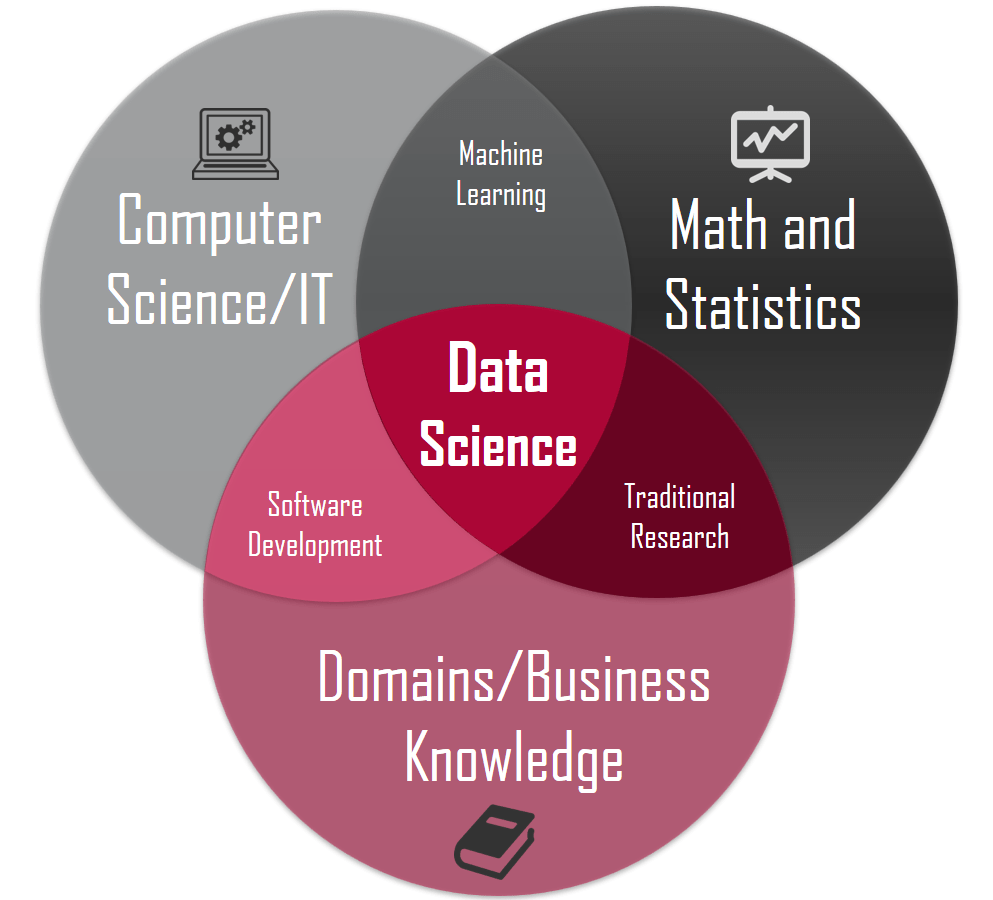
You probably hear the word “Data Science”
on a regular basis. But what exactly is data science? And why are we
hearing so much about it now?

First let us understand why data science is needed.

The need for Data Science

In this era
of smartphones and internet, we have seen an exponential increase in
data. More and more data is produced everyday as the number of people
using internet is increasing. This led to the problem of storing the
enormous amount of data. Frameworks like Hadoop and others solved the
problem of storing the data. But what about processing this data? The
previous techniques can no longer be used efficiently as they were built
of processing on smaller data.This is where Data Science comes into the picture.

What is Data Science?

The formal definition of Data Science goes as follows: “Data
scienceis an interdisciplinary field that uses scientific methods,

View original post 279 more words

Data Analysis vs Data Analytics

data , data analysis , data analytics

mostlyfad's avatarData Journal Blog

Interchanging Analysis and Analytics may seem fine as both words have the same meaning in the dictionary. But when it comes to data, and from a technical perspective, we are talking about two different subjects, regardless of the fact of analyzing data for insights to drive all types of decisions.

According to Merriam-Webster dictionary, Analysis is the separation of a whole into its component parts, while Analytics is the method of logical analysis.

For an easier understanding, as many data scientists love to explain it, think in terms of past and future: Analysis is an overview of what happened while Analytics is about predicting what will happen:

Analysis: having the whole data set and analyzing a sample from it to learn more about it, and see how it is related to the other samples; ex: how my marketing campaign performed and what is the number of customers who responded according…

View original post 40 more words

Google proprietary web browser + websites

This is a company that, time and again, has tried to push the Web into a Google-controlled proprietary direction to improve the performance of Google’s online services when used in conjunction with Google’s browser, consolidating Google’s market positioning and putting everyone else at a disadvantage. Each time, pushback has come from the wider community, and so far, at least, the result has been industry standards that wrest control from Google’s hands. This action might already provoke doubts about the wisdom of handing effective control of the Web’s direction to Google, but at least a case could be made that, in the end, the right thing was done.

But other situations have had less satisfactory resolutions. YouTube has been a particular source of problems. Google controls a large fraction of the Web’s streaming video, and the company has, on a number of occasions, made changes to YouTube that make it worse in Edge and/or Firefox. Sometimes these changes have improved the site experience in Chrome, but even that isn’t always the case.

A person claiming to be a former Edge developer has today described one such action. For no obvious reason, Google changed YouTube to add a hidden, empty HTML element that overlaid each video. This element disabled Edge’s fastest, most efficient hardware accelerated video decoding. It hurt Edge’s battery-life performance and took it below Chrome’s. The change didn’t improve Chrome’s performance and didn’t appear to serve any real purpose; it just hurt Edge, allowing Google to claim that Chrome’s battery life was actually superior to Edge’s. Microsoft asked Google if the company could remove the element, to no avail.

The latest version of Edge addresses the YouTube issue and reinstated Edge’s performance. But when the company talks of having to do extra work to ensure EdgeHTML is compatible with the Web, this is the kind of thing that Microsoft has been forced to do.

As another example, YouTube uses a feature called HTML imports to load scripts. HTML imports haven’t been widely adopted, either by developers or browsers alike, and ECMAScript modules are expected to serve the same role. But they’re available in Chrome and used by YouTube. For Firefox and Edge, YouTube sends a JavaScript implementation of HTML imports which carries significant performance overheads. The result? YouTube pages that load in a second in Chrome take many seconds to load in other browsers.

These actions may not be deliberate on the part of Google—it’s possible that the company simply doesn’t care about other browsers, rather than actively trying to hinder them. But even an attitude of “Google first, who cares about the rest?” is not the kind of thing that we should want from a company trusted with so much control over the Web.

https://arstechnica.com/gadgets/2018/12/the-web-now-belongs-to-google-and-that-should-worry-us-all/